Search
Start typing to search for destinations or experiences
Tour Overview
Enter the sacred world as seen in Kantara — where faith, fire, and folklore unite in one of India’s most profound living traditions.
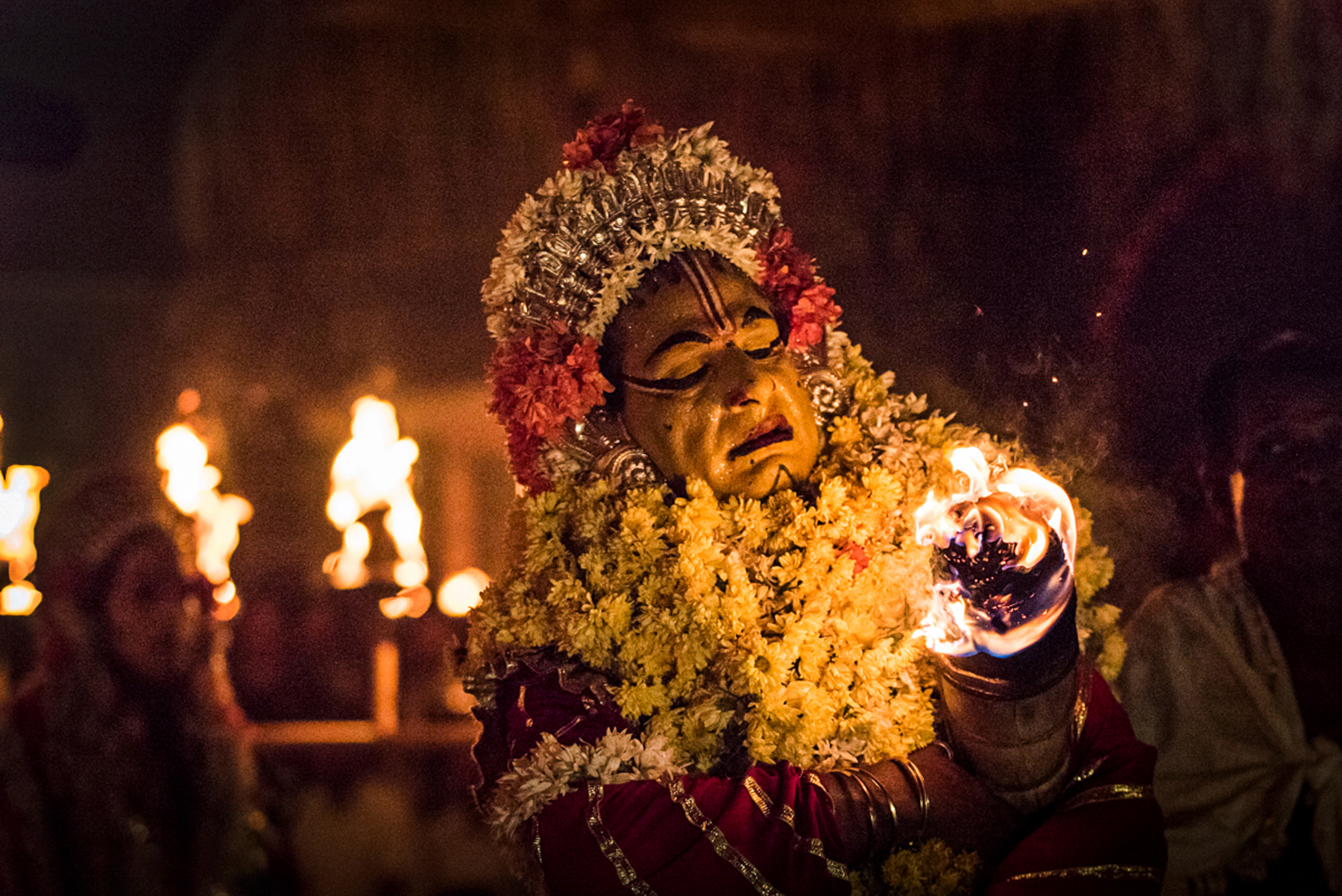
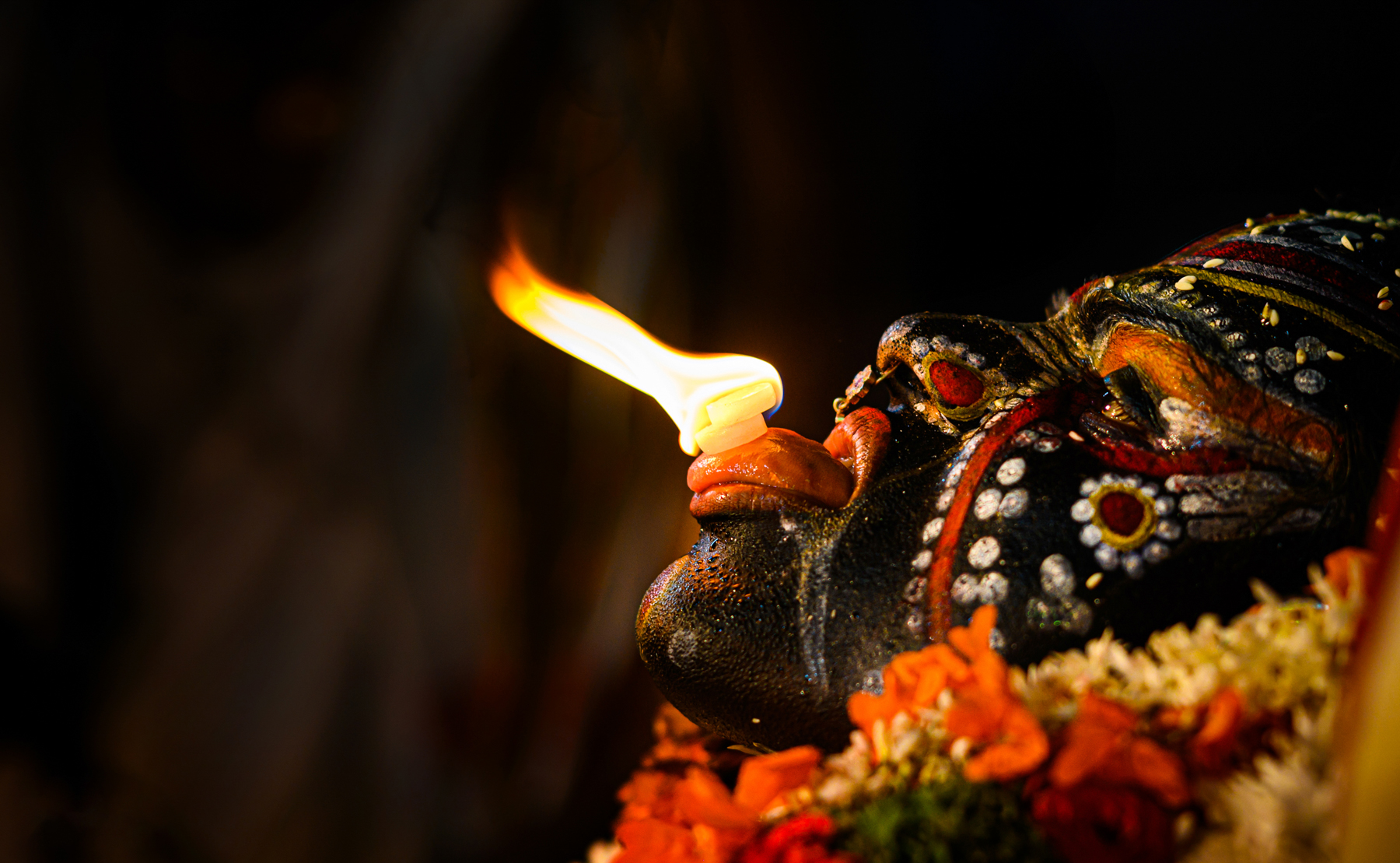
The Bhoota Kola Experience opens a rare window into Tulunadu’s spirit-worship heritage, where ancient beliefs, ecological respect, and community justice merge in a spectacle of divine possession and devotion.
Tour Highlights
In the lush belt between the Western Ghats and the Arabian Sea, the people of Tulunadu continue to worship their Bhootas (spirits) and Daivas (guardian deities) through rituals that have endured for centuries.
These ceremonies — made famous to global audiences as seen in Kantara — are not folklore but faith in motion.
Visit sacred Panjurli and Guliga Daiva Sthanas and the ancient Naga Banás, serpent groves that symbolize fertility and nature’s protection. Witness Yakshagana folk theatre, a vivid blend of myth and music, and meet the Pardhanas, oral bards who carry ancestral stories in song.
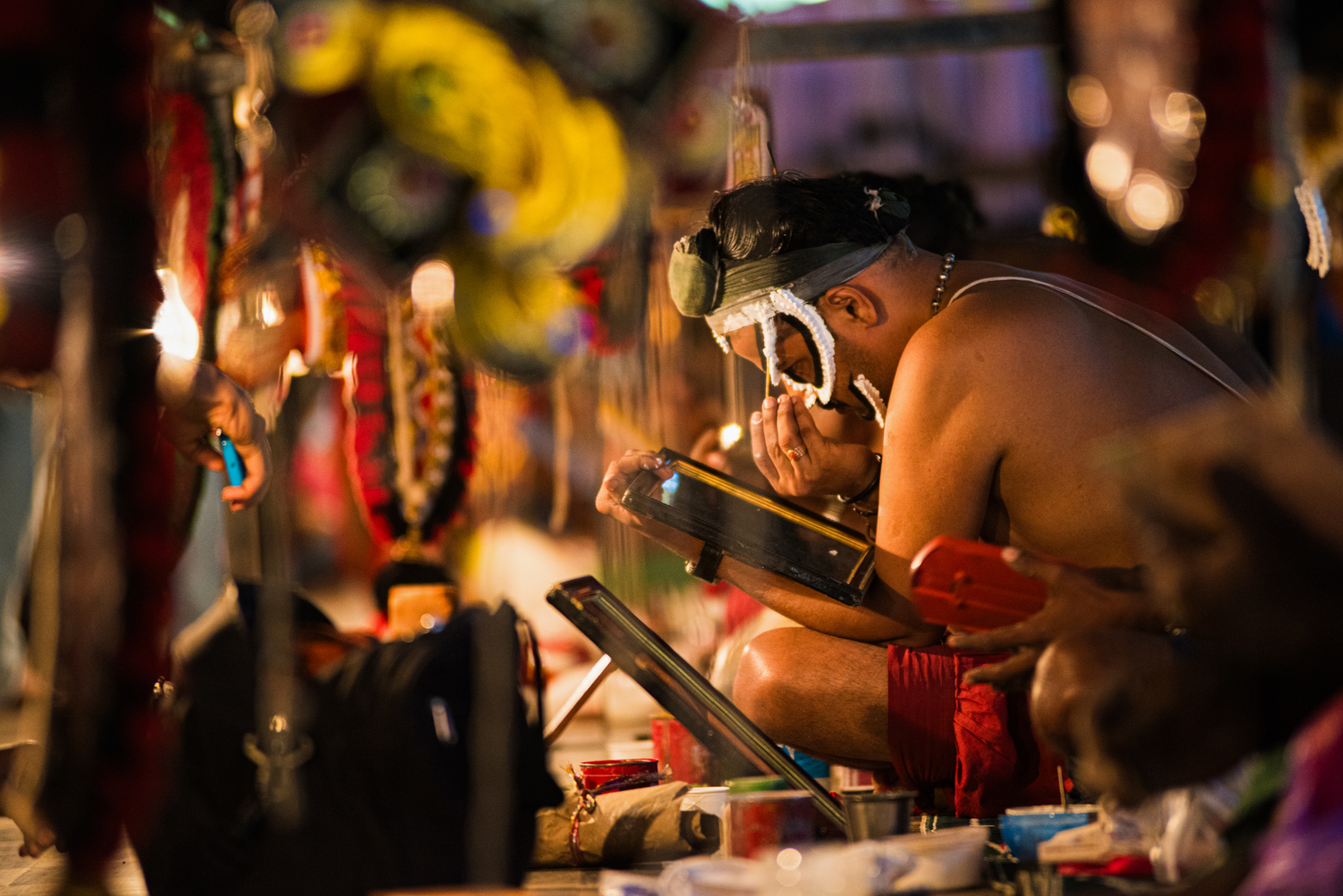
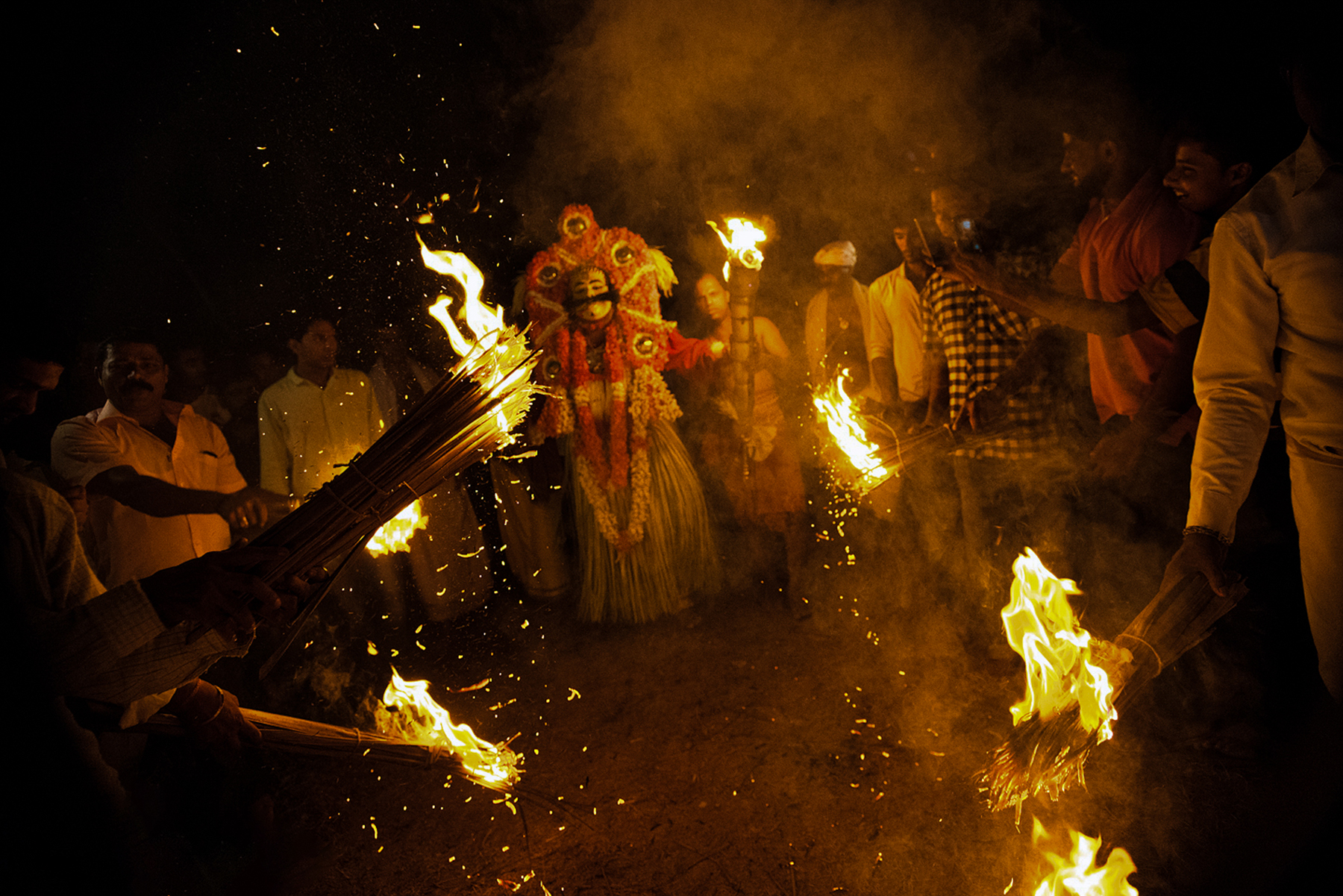
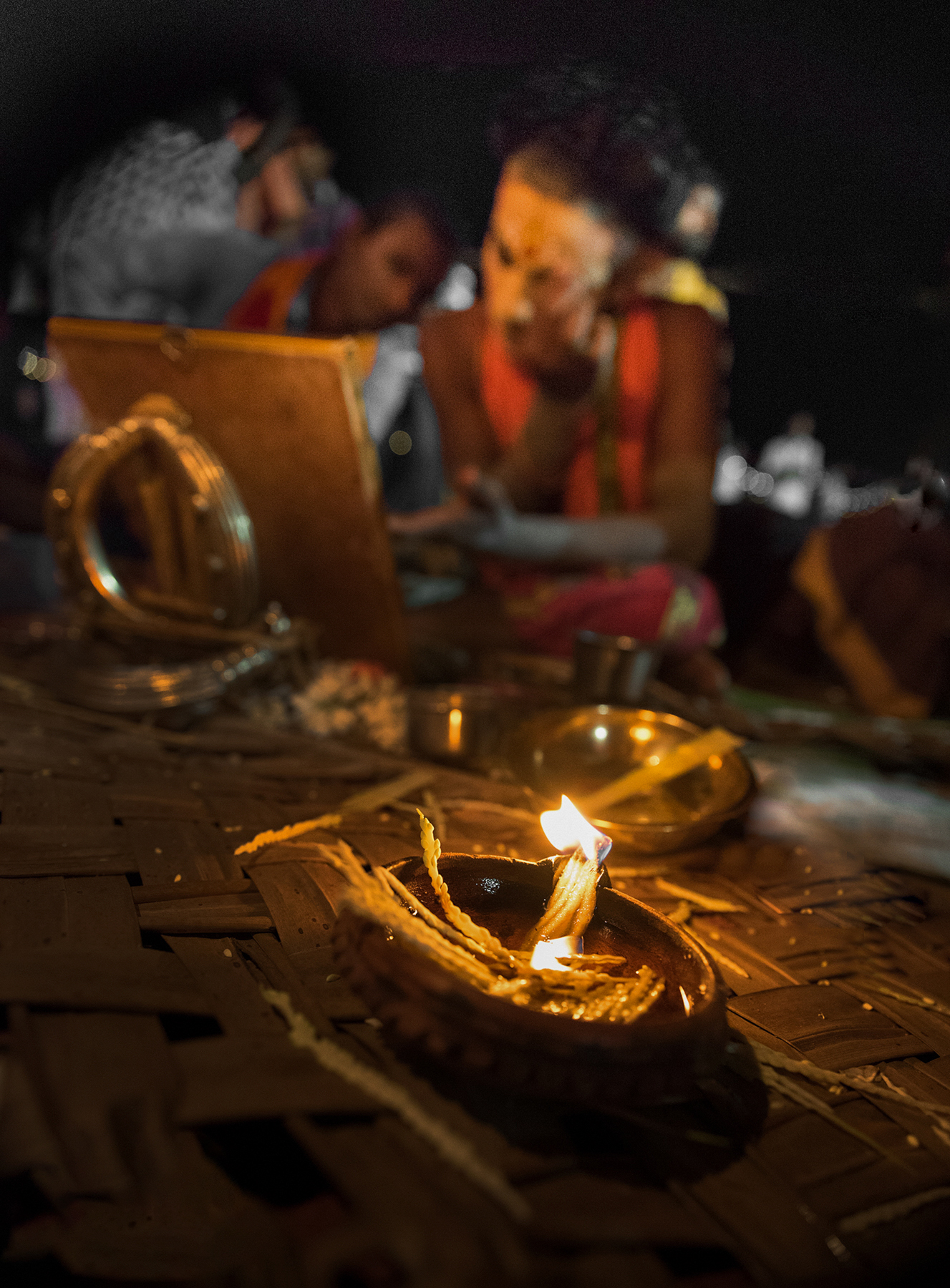
Join local custodians for a guided orientation on Daiva traditions, culminating in the breathtaking Bhoota Kola ceremony — a night of drums, fire, and trance when the divine descends to speak through the medium of the performer.
Complement these sacred encounters with peaceful moments at Hoode Beach, temple visits, and a quiet nature walk to end your journey in reflection.
Tour Highlights:
🔥 Bhoota Kola Ceremony – Authentic spirit-worship ritual as seen in Kantara
🐾 Panjurli & Guliga Daiva Sthanas – Sacred guardian shrines of Tulunadu
🌿 Naga Banás – Serpent groves honouring fertility and ecological balance
🎭 Yakshagana Folk Theatre – Epic storytelling in music, costume & rhythm
🪶 Pardhana Oral Traditions – Meet the bards who keep spirit legends alive
🌊 Hoode Beach & Temple Visits – Moments of serenity by the sea
🌳 Nature Walk & Reflection – Experience Tulunadu’s living sacred landscape
Available options
What's included
Tour Venue
Important Information
Accommodation:
Paradise Lagoon / Paradise Isle or similar category resort (standard room; upgrade available at extra cost, subject to availability).
Enjoy access to a swimming pool, indoor games, on-site restaurants, and convenient on-site parking. Fishing, boating, and spa experiences are available at additional charges and subject to availability.
Booking On Request Only
Temple Visit Guidelines:
Visiting South Indian temples is a deeply spiritual and cultural experience. To ensure respect for local traditions and to make the most of your visit, please keep these guidelines in mind:
🌸 General Etiquette
Dress modestly — traditional attire is preferred (men: dhoti/pants with shirt; women: saree or salwar kameez). Avoid shorts, sleeveless tops, or tight clothing.
Carry small change for offerings, donations, and prasadam.
Remove footwear and leather items (belts, wallets, bags) before entering temple premises.
Maintain silence and respect devotees engaged in prayer or rituals.
Avoid public displays of affection or loud conversations inside temple grounds.
📸 Photography & Behavior
Ask before taking photos — many temples prohibit photography inside sanctum areas.
Avoid pointing feet toward deities or sacred objects.
Do not touch idols, lamps, or priests unless permitted.
Follow queues and instructions from temple staff for darshan (viewing the deity).
Do not step over offerings or temple thresholds — step carefully and respectfully.
🙏 Rituals & Customs
Women are traditionally not permitted to enter temples during menstruation, in keeping with local customs.
Wash hands and feet before entering the main temple.
Offerings (flowers, coconuts, fruits) can be bought from nearby stalls — avoid bringing non-vegetarian food or alcohol.
Refrain from wearing hats or sunglasses inside the temple.
Do not consume food or chew gum inside temple premises unless it is prasadam (offering).
🌿 Helpful Tips for Visitors
Visit early morning or evening to avoid crowds and heat.
Respect temple animals — cows, elephants, or monkeys — but keep a safe distance.
Some temples have different entry gates or queues for men and women — follow signage.
Foreign visitors may have restricted access to inner sanctums in certain temples.
Participate with an open heart — observing rituals and chants adds depth to your experience.
Customer Reviews
Leave a Review
Share your experience with other travelers